
The six types of crowdfunding — and how they differ for backers
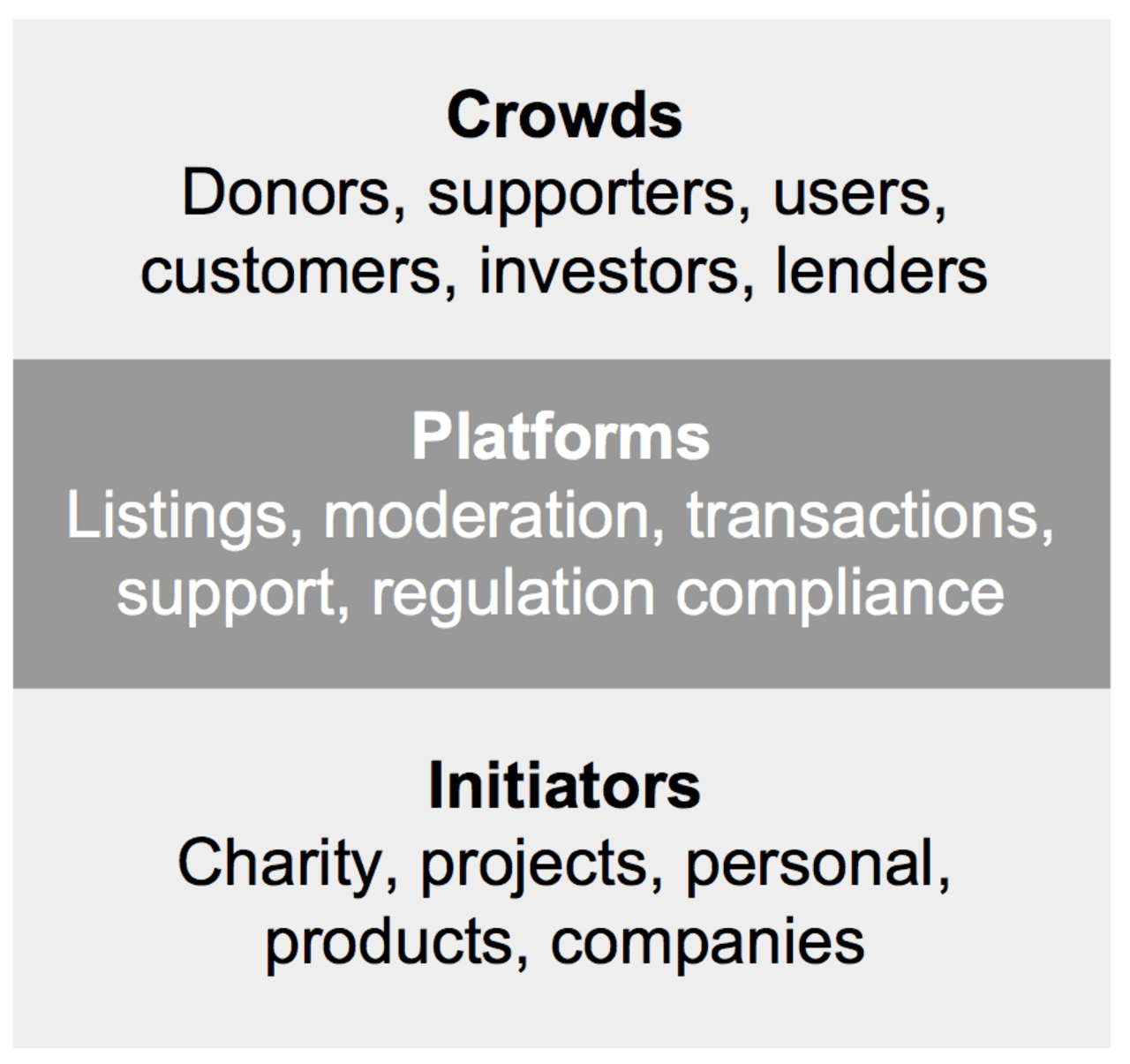
"Crowdfunding" is really six different models, and the differences matter: whether your money is expected to come back, and whether you're buying or investing, are not the same across them. Backing a reward project and waiting for a gadget is a world apart from holding unlisted shares in an equity deal. Bottom line: first work out which type you're looking at — that's the real first step before you pledge.
KAKEHASHI hosts no campaigns and takes no fee. So this guide isn't here to hype creators or shield platforms — it's a neutral, backer-side map of the landscape.
The six types at a glance
| Type | What you get | Nature | If the goal isn't met | Example platforms |
|---|---|---|---|---|
| Reward | A product or service | "Support-buying" (≠ a normal purchase) | Refund or proceed, by funding mode | Makuake / CAMPFIRE / GREEN FUNDING |
| Donation | Usually no reward | A gift | Often proceeds | READYFOR / For Good |
| Hometown-tax (GCF) | A thank-you gift + tax deduction | Donation + tax break | No refund even if undersubscribed | Furusato Choice |
| Equity | Unlisted shares | Investment (capital can be lost) | — | FUNDINNO |
| Fund | A share of revenue | Investment | — | Securite |
| Lending (social lending) | Interest | Investment (a loan) | — | Funds |
The per-type mechanics are also broken down in our Learn hub's six types of crowdfunding guide.
The "shopping" group: reward and donation
Reward — the most common, but not "shopping"
New products, gadgets and books, where you receive a product or service in return. But this is not the same as a normal online purchase — Makuake calls its own reward crowdfunding "support-buying": items are typically manufactured and shipped after the campaign ends, so delays — and, rarely, non-delivery — are possible by design (Makuake support-buying guide). "Support-buying ≠ buying" is the single most important mindset here.
Donation — backing without expecting a return
Mostly social causes and disaster relief; usually there's no reward (perhaps a thank-you note). The point is that your money goes to the cause itself.
The "tax" group: hometown-tax crowdfunding (GCF)
GCF (Government Crowdfunding) is run by local governments using Japan's hometown-tax (furusato nozei) donation system. You get a thank-you gift and a tax deduction — but it carries a trap that's the opposite of ordinary crowdfunding: even if the target isn't reached, the money raised still goes to the project and is not refunded to donors (Furusato Choice: what GCF is). Don't miss this one. We cover it in full at Government crowdfunding: why there's no refund. For the full mechanics and how to back a project, see Backing with hometown tax — how GCF works.
The "investing" group: equity, fund and lending
From here, you're neither buying nor donating — you're investing. The return is financial (shares, a revenue share, interest), and your principal may not come back.
- Equity: you acquire shares in an unlisted startup. They're illiquid, and if the company fails the value can go to zero. See Equity crowdfunding 101.
- Fund: you receive distributions tied to a business's revenue.
- Lending: you lend money and earn interest.
Important: investment types are investing, not backing. KAKEHASHI never recommends a security or predicts returns. Use only money you can afford to lose, and always read each service's risk disclosures.
Once you know the type, what next
With the type identified, the next step is to check whether the campaign is safe before you pledge — creator reality, product reality, terms. Our free Campaign Safety Check (/check) runs a 10-point review. If you find yourself even wondering "is this safe?", run it before the pledge button. Our full guide to spotting scams and trouble is How to spot crowdfunding scams.
Takeaways
- Crowdfunding is six types — split by "is a refund expected?" and "investing vs supporting?"
- Reward = "support-buying" — delays and non-delivery are possible by design.
- GCF (hometown-tax) gives no refund even when undersubscribed — the opposite of ordinary CF.
- Investment types (equity / fund / lending) can lose your principal — only money you can spare.
- Once you know the type, run it through /check before you pledge.
Sources
- Furusato Choice: what GCF (Government Crowdfunding) is
- Makuake: support-buying safety guide
- CAMPFIRE: All-or-Nothing vs All-in
Related reading
- What Is “Ouen Kounyu” (Support-Purchase)? Makuake’s “Cheer + Buy” Concept, and the Fine Print for Backers
- Where Does Your Crowdfunding Pledge Go? Following ¥10,000 Through the Fees
- How to Back a Japanese Crowdfunding Campaign, Safely: The 7-Step Backer's Guide
- Social Lending vs. Crowdfunding in Japan: Why the Rules — and the Risk — Are Completely Different
- Donation vs. Crowdfunding in Japan: Which One Actually Gets You a Tax Deduction?
- What Is Japan's "Futokuho" Real Estate Crowdfunding License?
FAQ
- What are the different types of crowdfunding?
- Crowdfunding splits into six models: reward, donation, hometown-tax (GCF), equity, fund, and lending. The differences that matter are whether your money is expected to come back, and whether you're buying, donating, or investing—backing a reward project is a world apart from holding unlisted shares in an equity deal. The real first step before you pledge is to work out which type you're looking at.
- Is reward crowdfunding the same as buying online?
- No. In reward crowdfunding you receive a product or service, but Makuake calls its own reward model "support-buying": items are typically manufactured and shipped after the campaign ends. That means delays—and, rarely, non-delivery—are possible by design, so "support-buying ≠ buying" is the single most important mindset here.
- Do you get a refund if a hometown-tax (GCF) campaign doesn't reach its goal?
- No. GCF (Government Crowdfunding) is run by local governments using Japan's hometown-tax donation system, giving you a thank-you gift and a tax deduction. But unlike ordinary crowdfunding, even if the target isn't reached the money raised still goes to the project and is not refunded to donors—a trap worth remembering before you give.